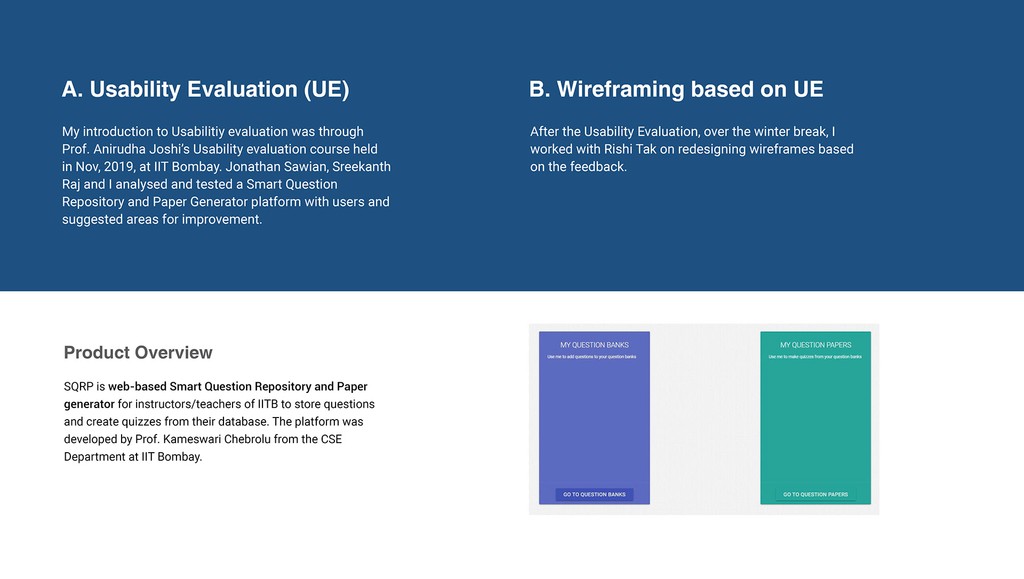
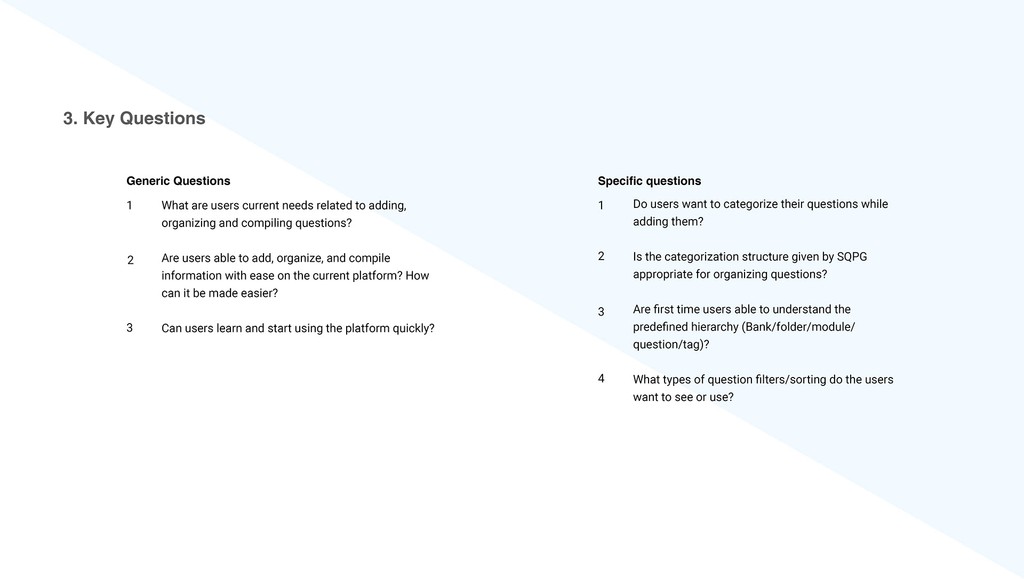
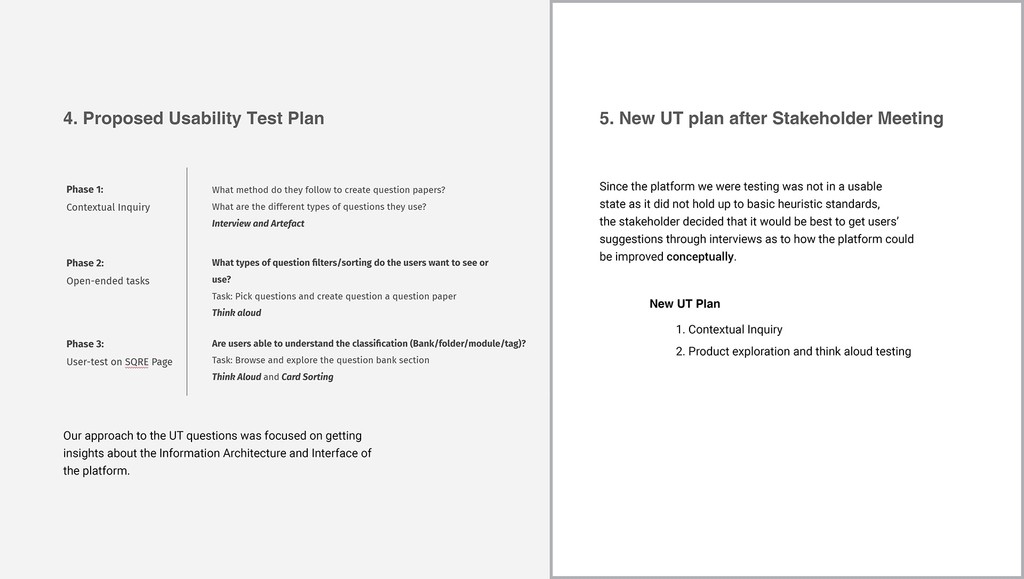
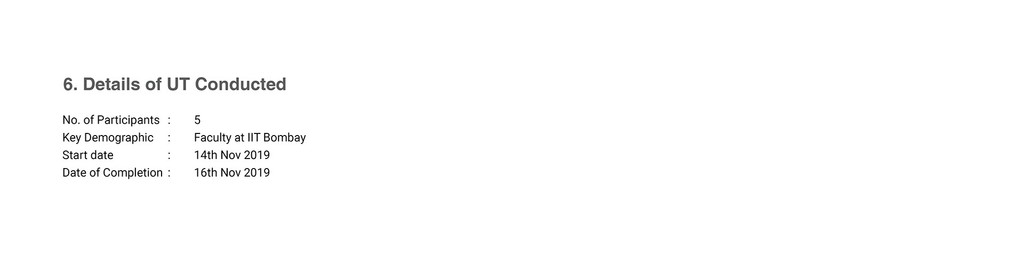
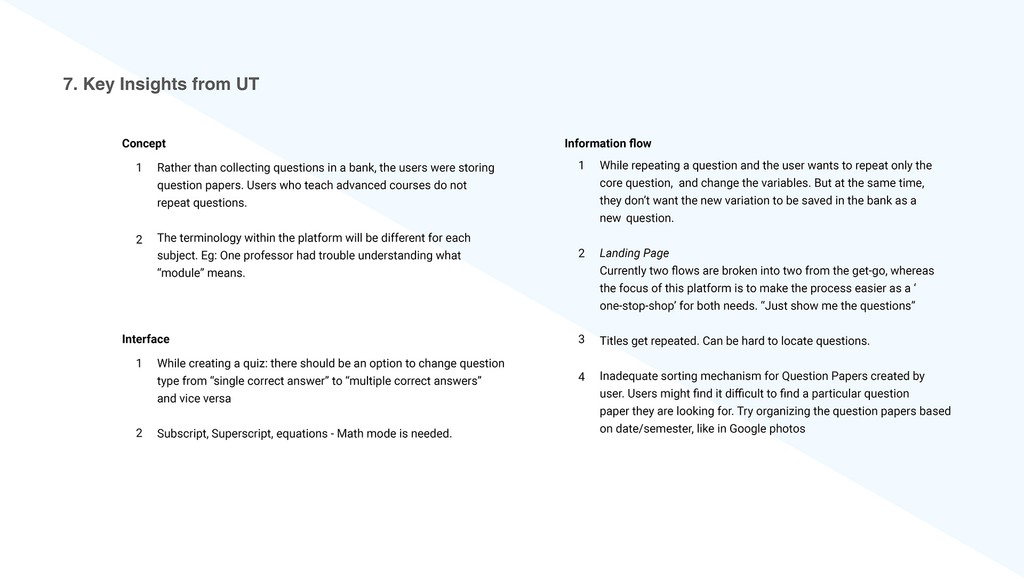
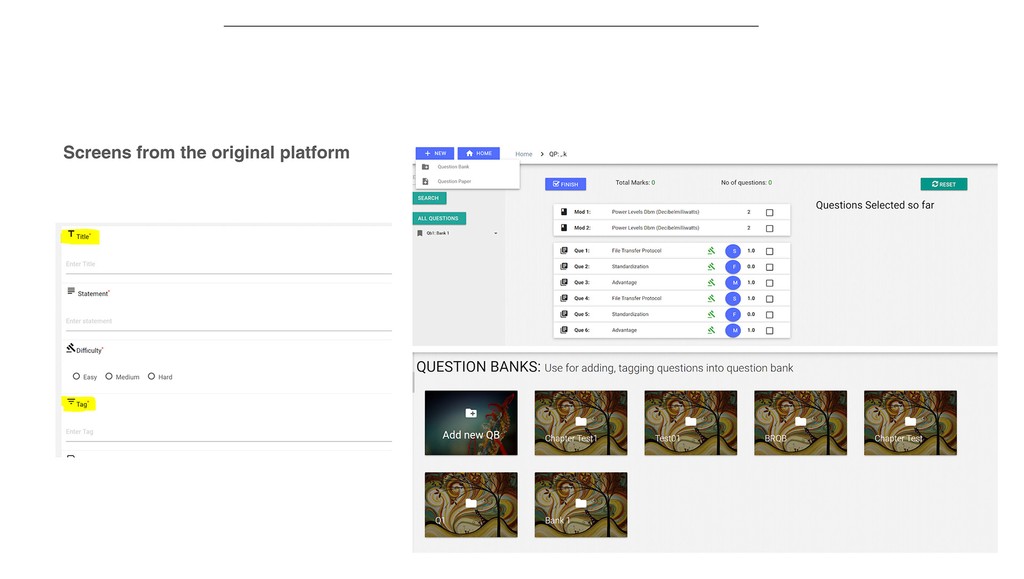
We spent time with professors at the CSE department in IIT Bombay, observing how they used the smart question repository. Through contextual inquiry and think-aloud sessions, we started to notice the pain points: clunky navigation, hidden information, confusing buttons, and small interactions that didn’t do what users expected.
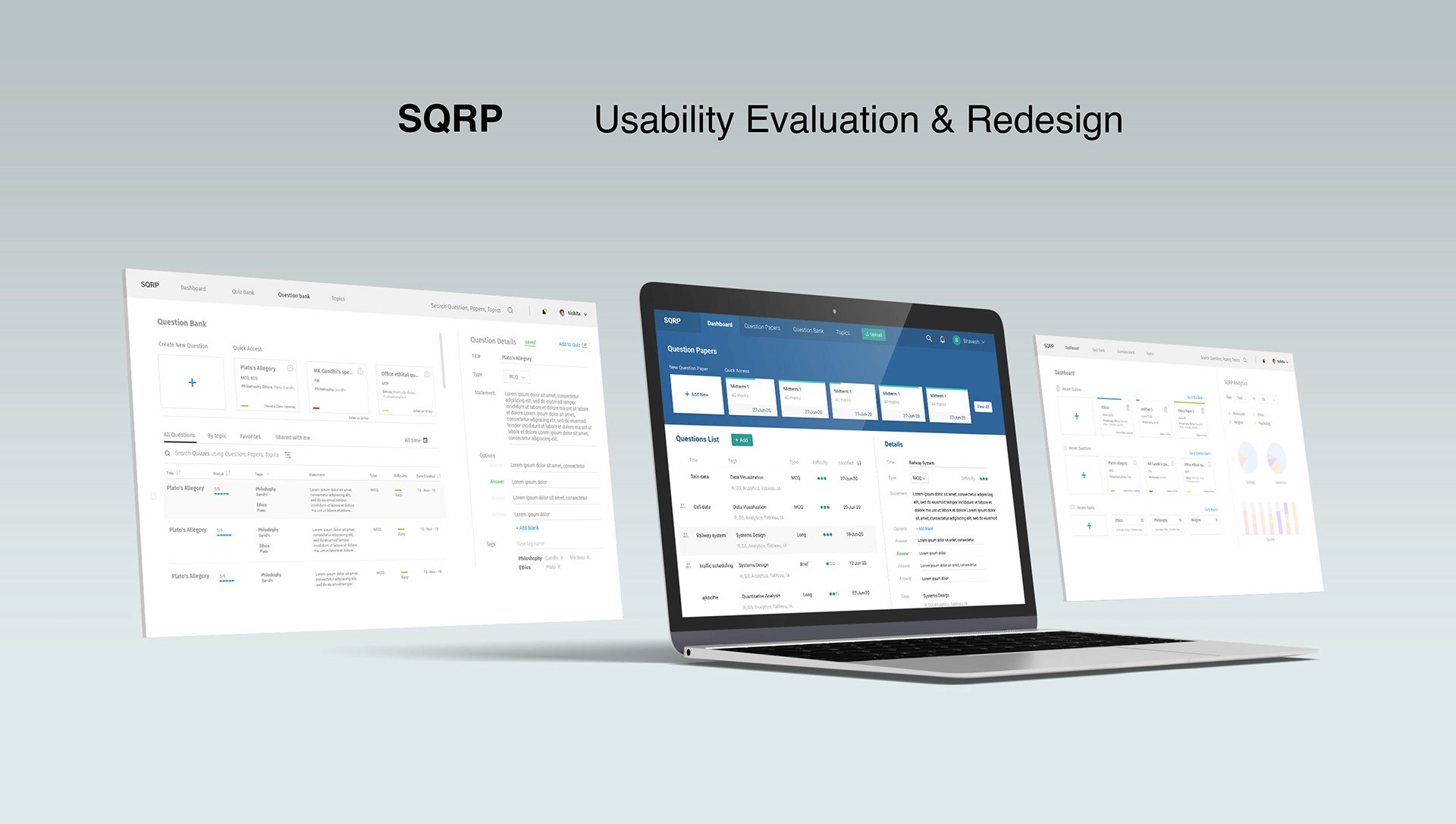
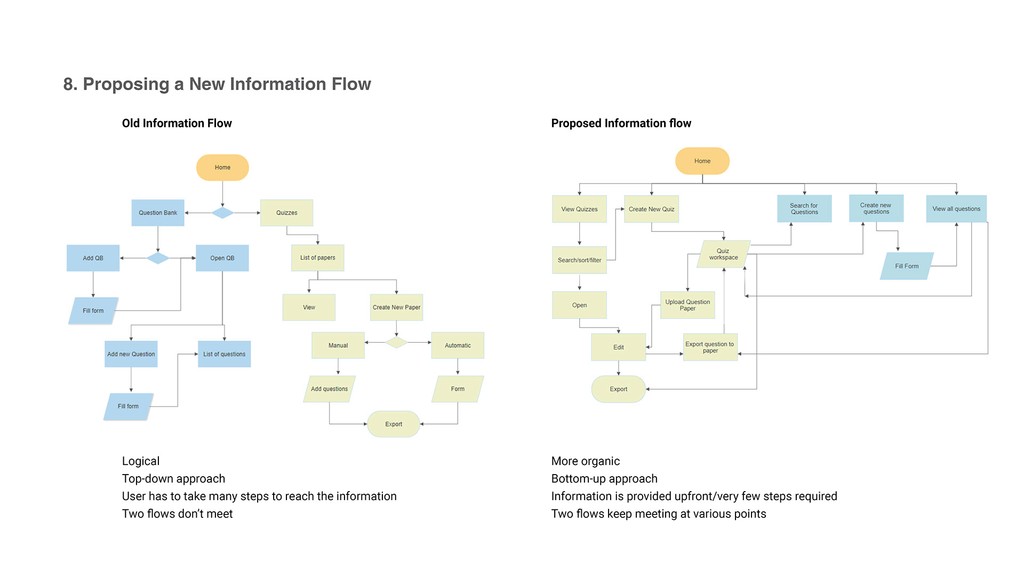
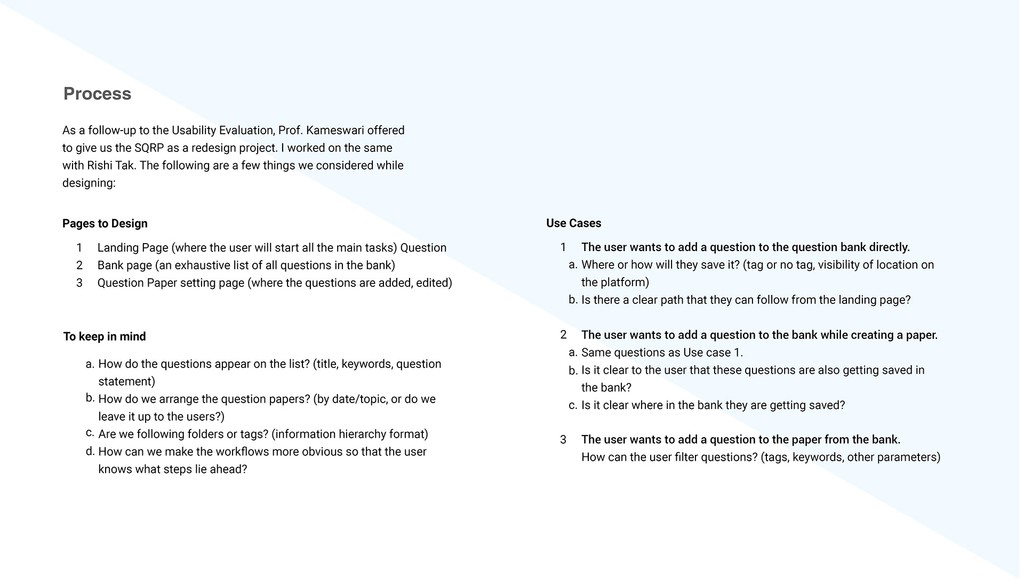
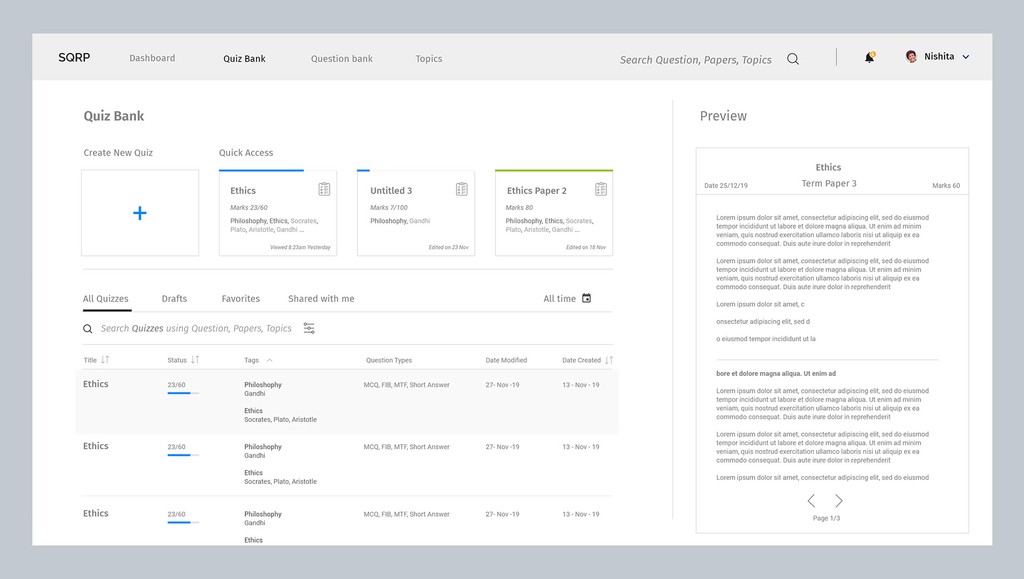
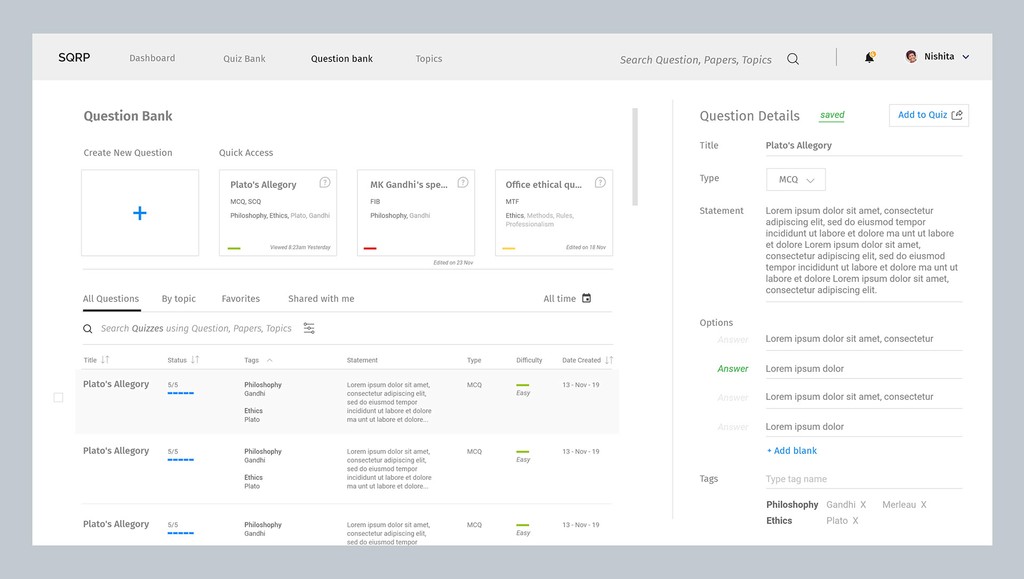
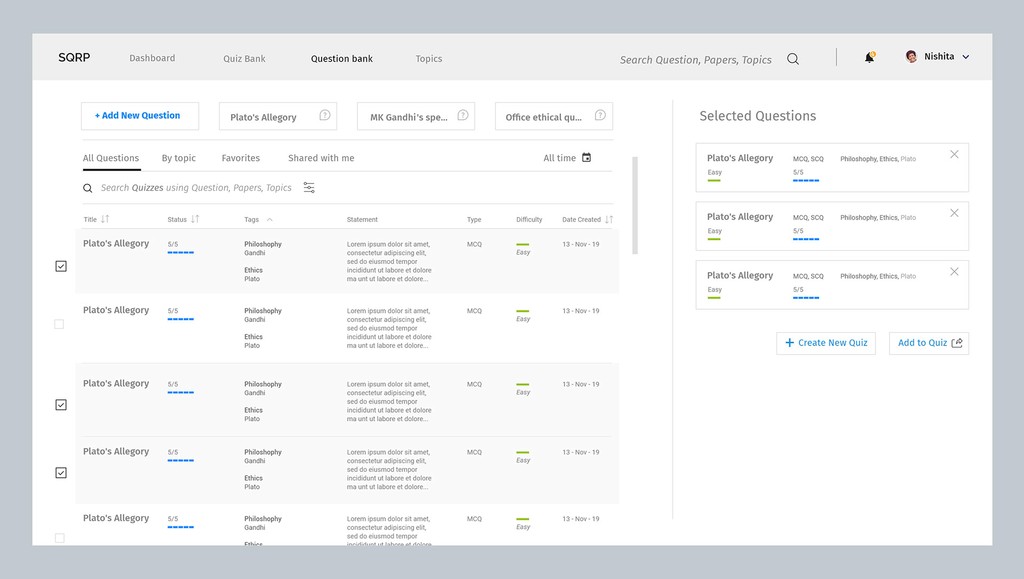
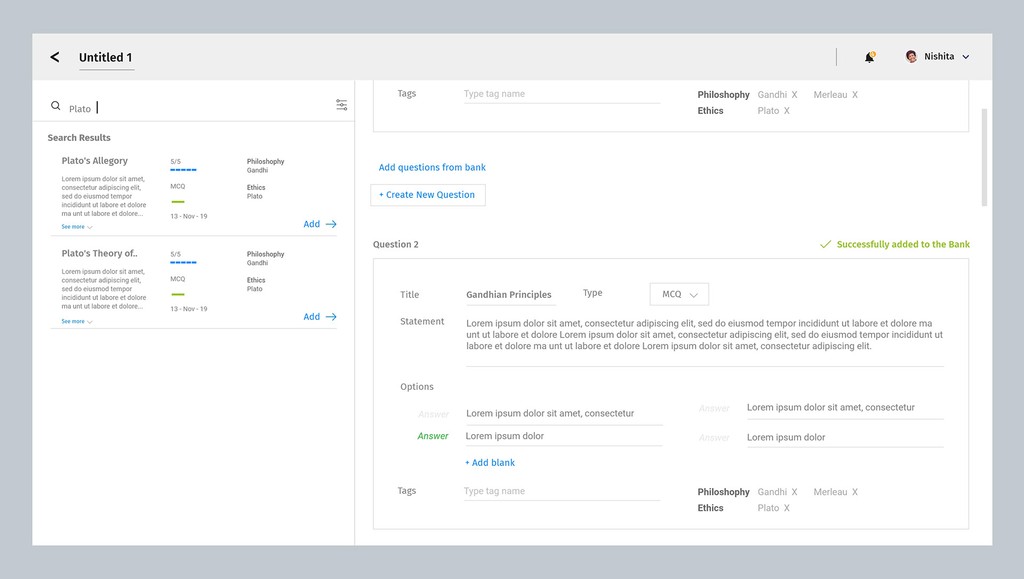
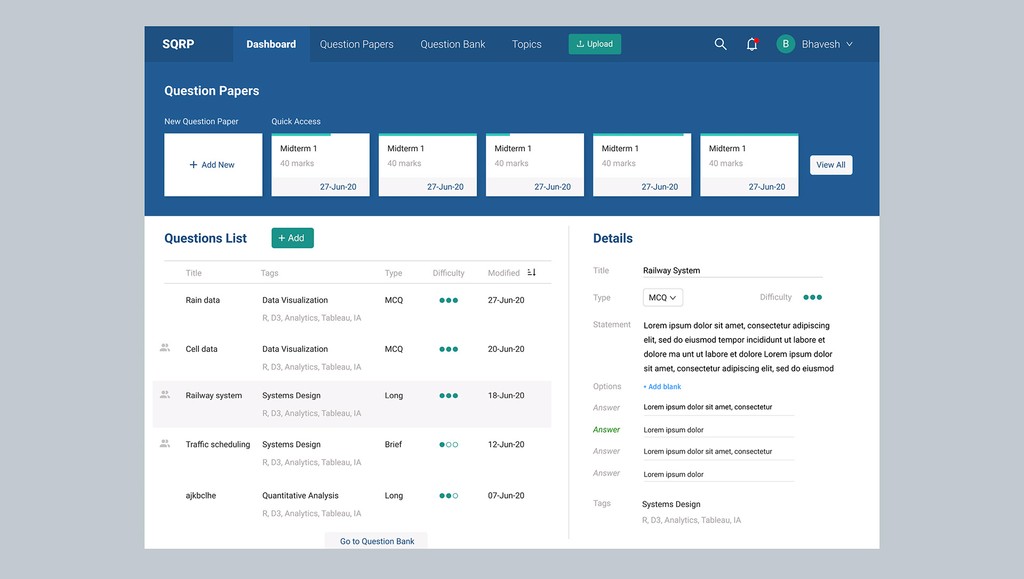
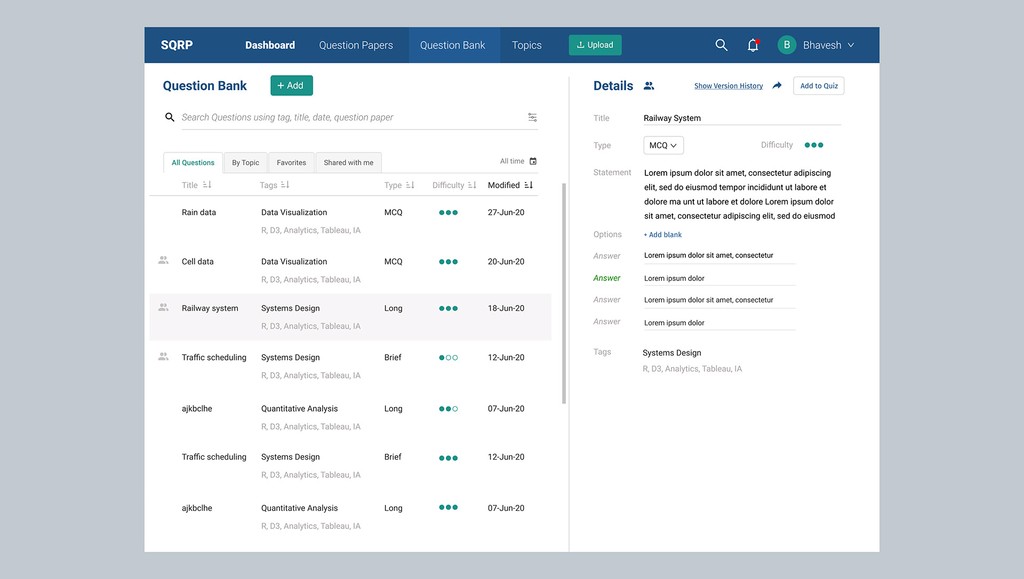
We put our findings together and presented them along with a redesign plan that focused on clarity, consistency, and ease of use. I then continued the project with Rishi Tak, where we restructured the information architecture, refined the navigation, and introduced clearer terminology across the platform. I also created wireframes that brought these changes to life and made the interface feel more intuitive.
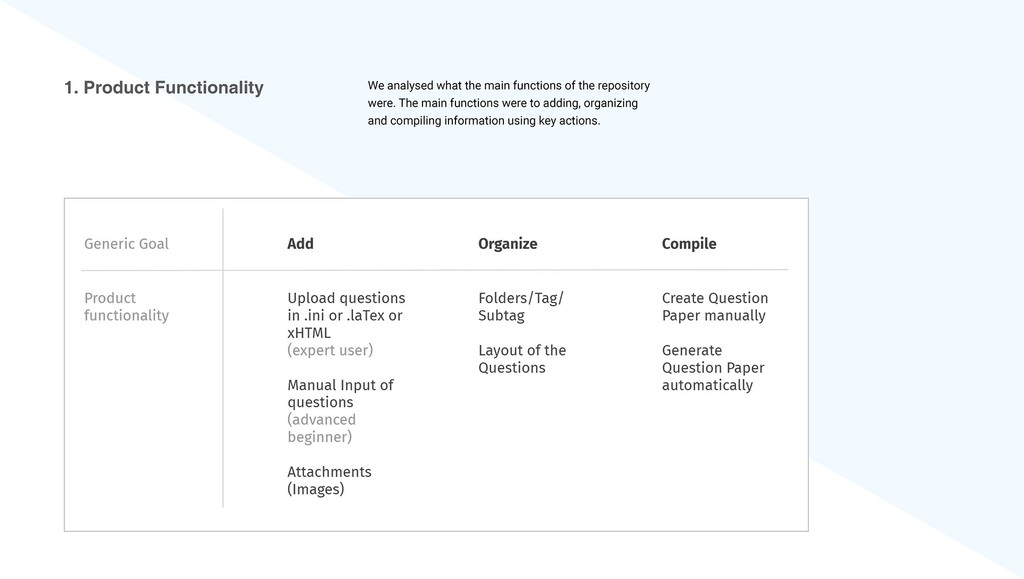
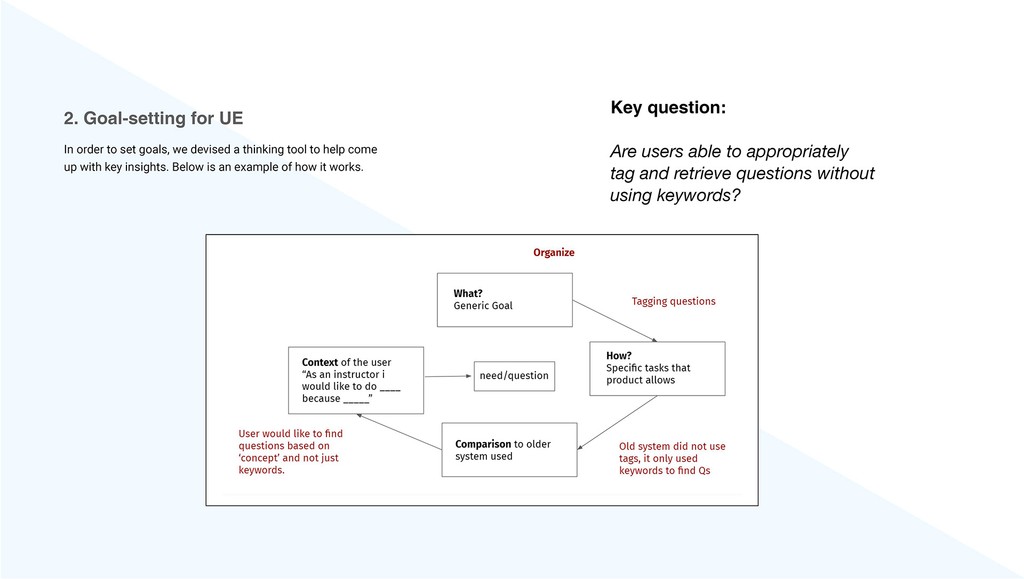
You can see the full process in the slides below. It’s a mix of research, redesign, and a lot of thought around how to make things genuinely work better for the people using them.
We spent time with professors at the CSE department in IIT Bombay, observing how they used the smart question repository. Through contextual inquiry and think-aloud sessions, we started to notice the pain points: clunky navigation, hidden information, confusing buttons, and small interactions that didn’t do what users expected.
We put our findings together and presented them along with a redesign plan that focused on clarity, consistency, and ease of use. I then continued the project with Rishi Tak, where we restructured the information architecture, refined the navigation, and introduced clearer terminology across the platform. I also created wireframes that brought these changes to life and made the interface feel more intuitive.
You can see the full process in the slides below. It’s a mix of research, redesign, and a lot of thought around how to make things genuinely work better for the people using them.